Apple Must Pectin Haze Troubleshooting for Cider Mills
When apple must will not clear, the problem rarely lives in one place. Variety mix, ripeness, milling texture, pomace temperature, press timing, pectin load, and cellar handling all show up in the glass.
Enzymesbridge helps hard cider producers choose enzyme solutions that make cider behave more predictably: freer juice release, cleaner press cycles, faster clarification, lower sludge burden, and bright cider that still carries orchard aroma.
If you are comparing an enzyme supplier for cider production, this page gives you a practical troubleshooting map before you request a wholesale quote for your mill or your customers.
Request a quote — send the product or job, the quantity, and the delivery country.
What pectin haze looks like in production
Pectin haze is often mistaken for yeast, starch, protein, or poor filtration. In cider mills, it tends to appear as one or more of these symptoms:
- Must looks glossy or viscous instead of cleanly juicy after milling
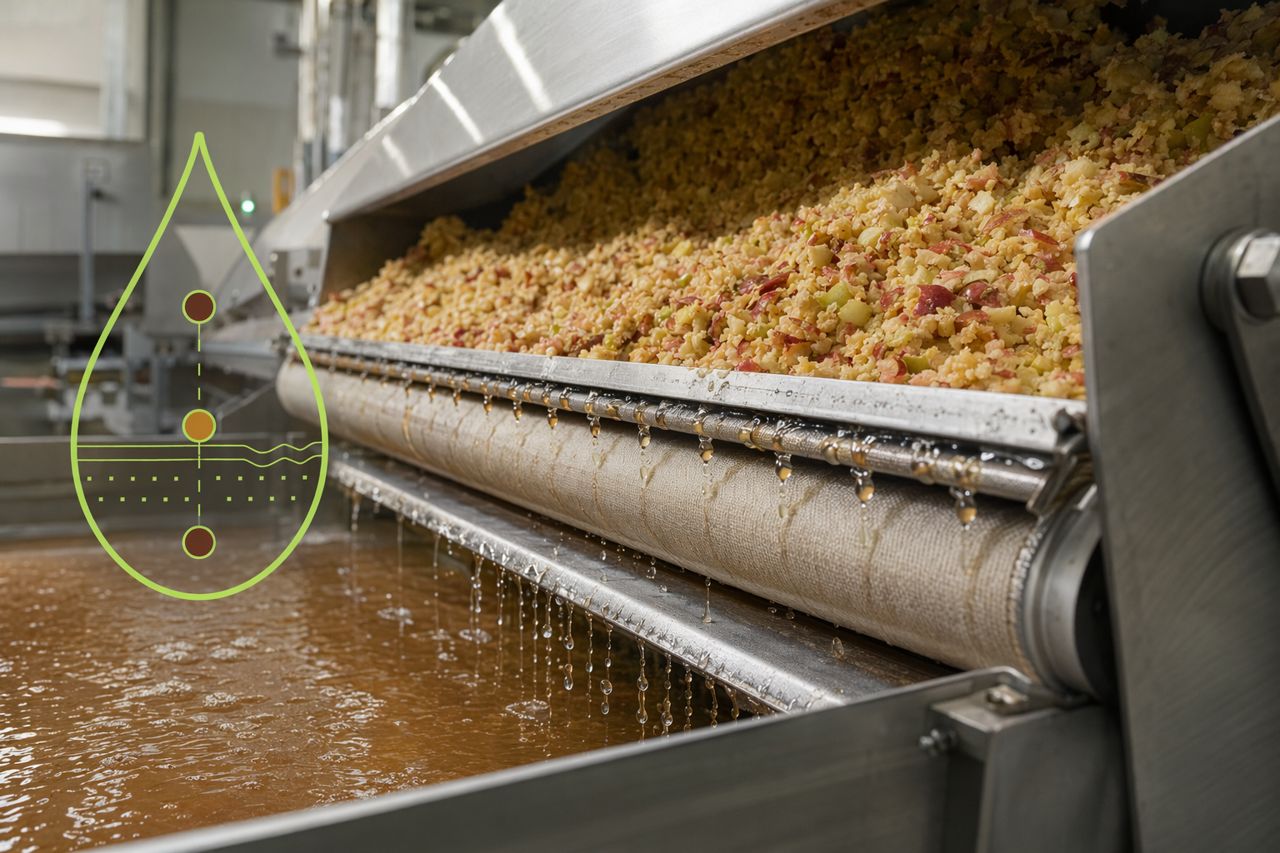
- Free-run juice is low, while pomace still feels wet after pressing
- Press cycles stretch longer than expected for the same apple blend
- Settling tanks form a loose, fluffy layer instead of compact lees
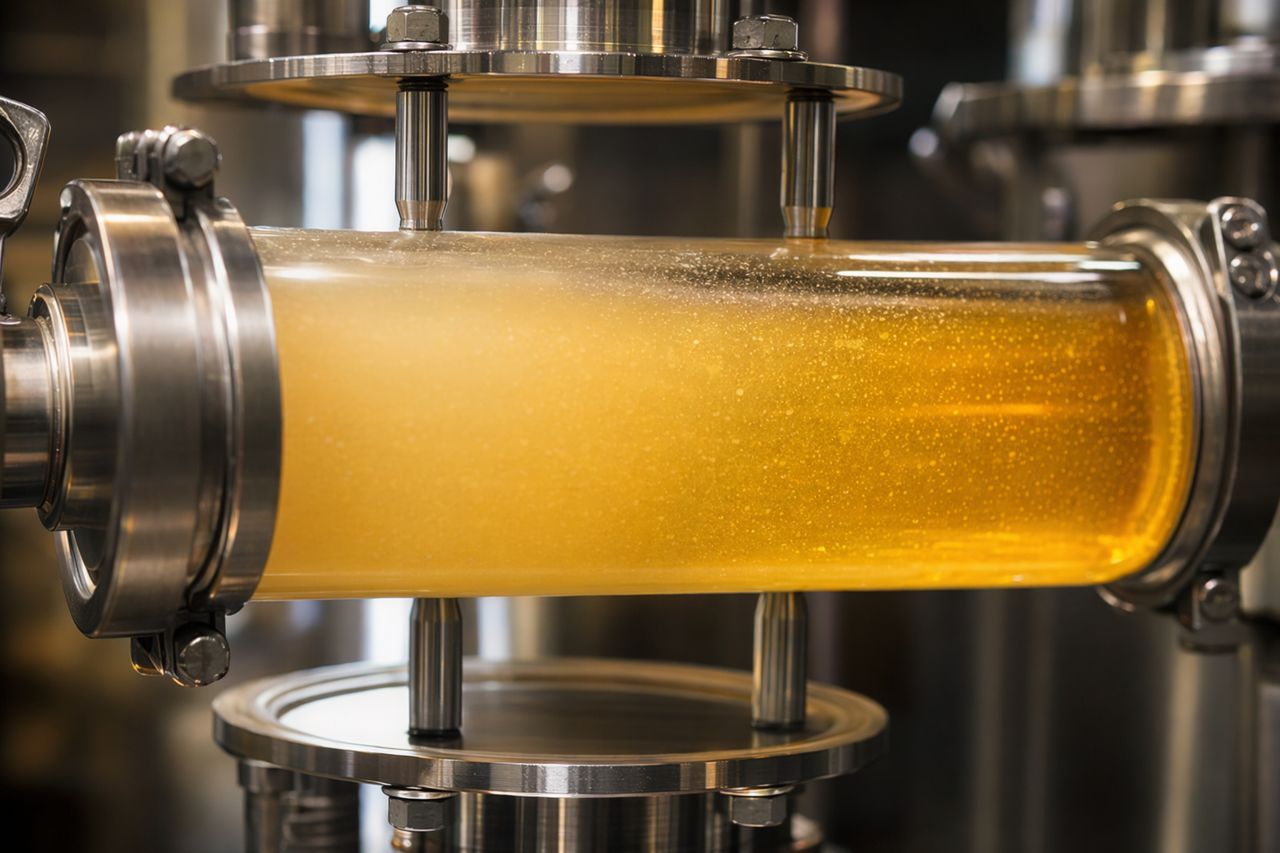
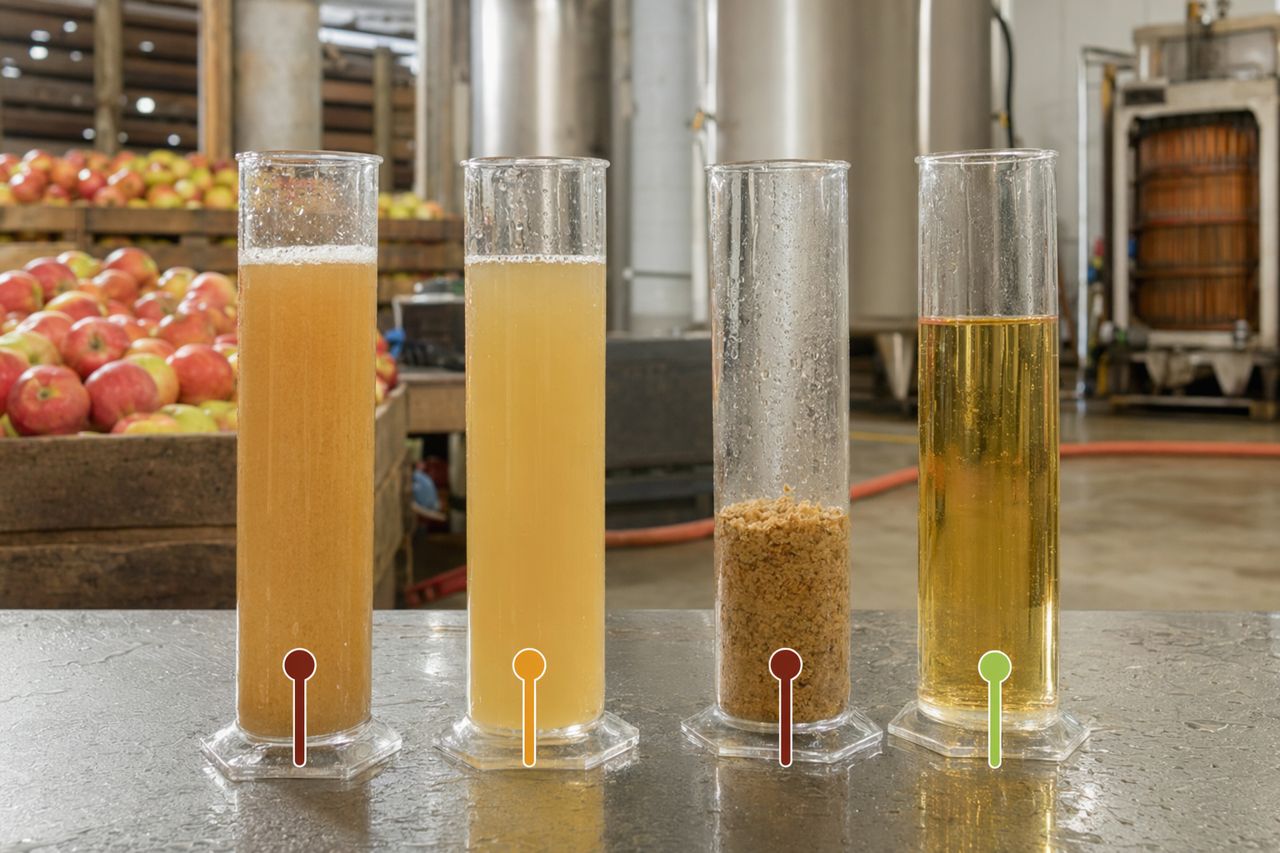
- Juice remains opalescent after normal cold settling
- Fermentation starts cleanly, but finished cider stays dull or veiled
- Filtration pressure climbs early, even when cider appears mostly settled
- Brightness varies sharply between apple lots, harvest dates, or storage bins
The fix is not simply "more enzyme." The right enzyme selection depends on where the resistance is happening: in the mash, at the press, in juice settling, or after fermentation.
Symptom-to-cause troubleshooting map
1. Wet pomace and slow press throughput
Likely process signal: Cell wall structure and soluble pectin are holding juice in the apple solids.
What to review:
- Mill gap and pomace texture
- Mash residence time before pressing
- Fruit temperature at processing
- Apple variety and storage condition
- Whether enzyme contact is happening before the press or too late in the flow
Enzymesbridge pathway: A mash-focused pectinase system designed for juice release and pressability. This route supports freer drainage, less press drag, and more consistent yield without stripping the cider of fresh apple character.
2. Juice looks clear at first, then develops a stable haze
Likely process signal: Soluble pectin remains in the juice and later binds water, fine solids, or colloidal material into a persistent veil.
What to review:
- Whether enzyme was applied uniformly to the must
- Contact time before chilling or transfer
- Rapid temperature drops that slow clarification
- Juice holding time before fermentation
- Cider pH and tannin profile
Enzymesbridge pathway: A clarification-oriented pectin enzyme selected for soluble pectin breakdown in juice. The goal is faster settling, better lees compaction, and a brighter fermentation base.
3. Settling is slow and lees stay fluffy
Likely process signal: Fine pulp and colloids remain suspended because the pectin network is not sufficiently loosened.
What to review:
- Turbidity target before fermentation
- Tank geometry and racking height
- Time between pressing and inoculation
- Whether apples were overripe, mealier, or long-stored
- Any blending with high-pectin dessert fruit
Enzymesbridge pathway: A balanced depectinization and settling aid strategy that improves separation without pushing the juice toward a thin or overprocessed profile.
4. Fermentation is consistent, but finished cider will not polish
Likely process signal: Residual pectin or late-forming colloidal haze is carrying through cellar operations.
What to review:
- Pre-fermentation clarification level
- Timing of racking and stabilization
- Filtration loading behavior
- Use of back-sweetening juice or concentrate
- Whether hazy lots trace back to specific apple bins or press days
Enzymesbridge pathway: A finishing-support enzyme selection for cider that needs better polish before filtration or packaging. This is especially useful when haze risk appears after blending or sweetening.
Where enzyme choice changes the economics
For a hard cider mill, haze is not just a visual issue. It affects labor, tank turns, filtration media, product consistency, and how confidently you can schedule packaging.
A well-matched enzyme program can help you:
- Recover more saleable juice from the same apple tonnage
- Shorten press cycles and reduce bottlenecks during harvest
- Improve settling speed before fermentation
- Reduce cloudy transfers and excess lees losses
- Lower filtration stress and unplanned cartridge changes
- Protect bright apple aroma by reducing over-handling
- Make haze outcomes more repeatable across changing fruit lots
That is the practical value of working with an enzyme supplier for cider production that understands both the orchard and the cellar.
Choosing the right pectin enzyme pathway
Enzymesbridge does not start with a generic product list. We start with your process reality.
Mash treatment pathway
Best when your main issue is press performance, wet pomace, or low juice yield. The enzyme is chosen to work where apple tissue is still in contact with juice and solids.
Juice clarification pathway
Best when the press is acceptable, but must remains cloudy, settles slowly, or creates loose lees. The enzyme is selected to improve soluble pectin breakdown and clarification behavior.
Fermentation and finishing pathway
Best when haze survives into fermented cider, appears after blending, or complicates filtration. The enzyme strategy is built around polish, stability, and packaging readiness.
Hybrid pathway
Best for mills processing diverse apple blends, variable storage fruit, or high-throughput harvest runs. A hybrid approach separates press-release needs from later clarification needs, so one stage does not carry the full burden.
Information we ask for before recommending an enzyme
To quote accurately, we usually ask for:
- Apple varieties or blend style
- Approximate daily or seasonal apple throughput
- Milling and press type
- Typical mash holding time
- Juice temperature range during processing
- Current settling time and turbidity concerns
- Fermentation timing and packaging format
- Whether the goal is yield, speed, brightness, filtration relief, or all of the above
You do not need a perfect lab packet to start the conversation. A few production details and a clear symptom description are enough for us to point you toward the right cider enzyme pathway.
Quick diagnostic checklist
Before your next run, note the following at each stage:
- At the mill: Is the pomace cleanly cut, smeared, dry, wet, or pulpy?
- Before the press: Does the mash loosen, or does it stay stiff and glossy?
- During pressing: Does juice flow early, or does pressure build before yield appears?
- After pressing: Does the pomace break apart, or does it cling in wet cakes?
- In the tank: Do solids settle compactly, or do they float and stay fluffy?
- Before filtration: Does pressure rise quickly despite reasonable clarity?
These observations help us separate a pressability problem from a clarification problem and recommend the enzyme style that fits the actual bottleneck.
Why cider mills work with Enzymesbridge
Enzymesbridge supplies enzyme solutions for cider makers who care about throughput and sensory quality in the same breath. We speak in production outcomes: better drainage, cleaner settling, stable brightness, lower handling stress, and cider that still tastes like the fruit you pressed.
We will not push a one-size-fits-all answer. We help match enzyme selection to fruit condition, process stage, tank timing, and the commercial reality of your mill.
Request a quote
Tell us what you are seeing in the must, at the press, or in the finished cider, plus the quantity you need and the delivery country. Enzymesbridge supplies cider mills, juice processors, distributors and resellers in bulk and will help you identify the right enzyme pathway and prepare a quote per order.