Enzyme for Cider Press Yield
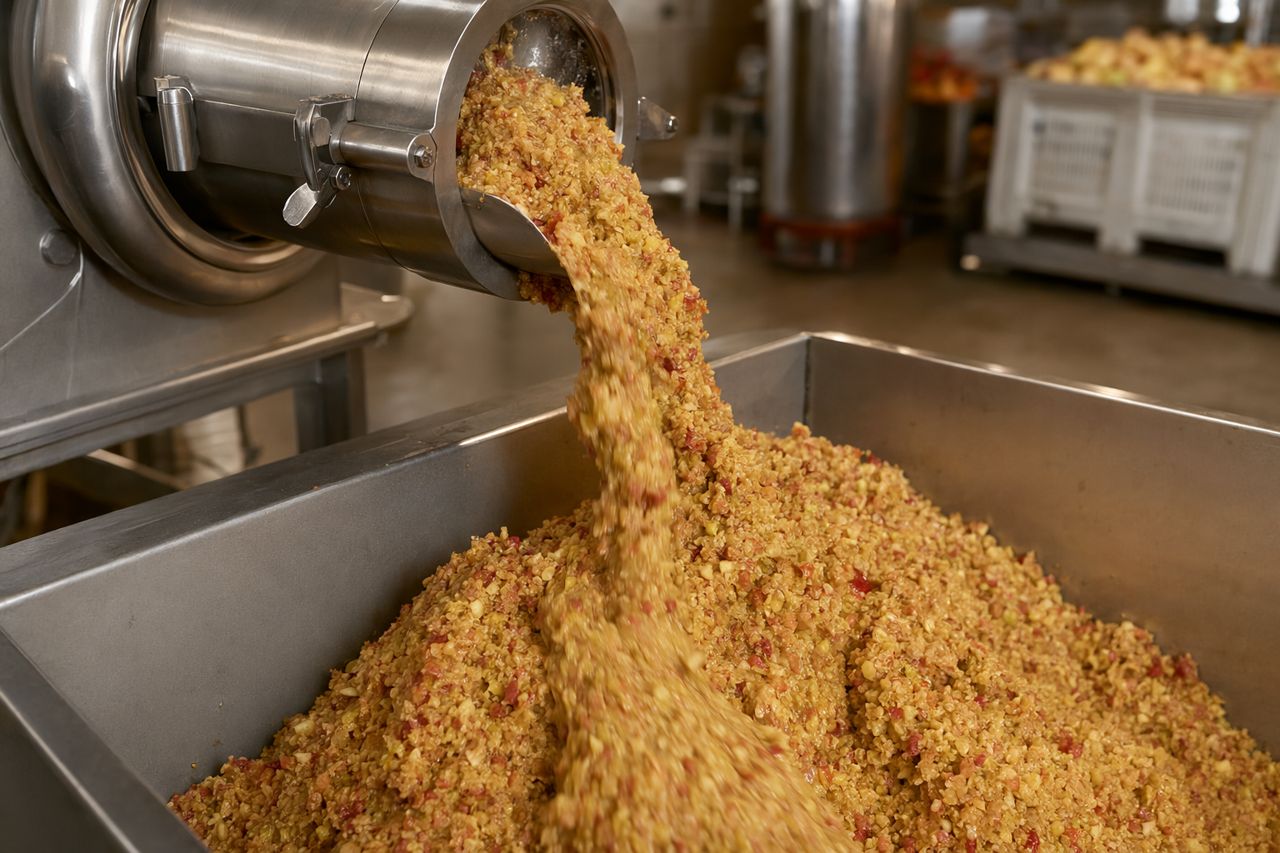
Apple behavior changes fast. Variety mix, maturity, storage time, milling profile, temperature, and fruit condition can all shift how pomace drains under pressure. One run presses clean and fast. The next holds juice, smears across belts, blinds cloth, and stretches the press cycle.
Enzymesbridge supplies enzyme solutions for cider mills that need more predictable extraction from real-world apples. Our press-yield enzyme approach is designed for mash handling before or during pressing, where pectin structure, soluble solids release, and pomace permeability directly affect yield, throughput, and tank planning.
Enzymesbridge supplies press-yield enzymes wholesale to cider mills, contract pressers, juice processors and resellers, quoted per order.
Request a quote — tell us the job (press yield, drainage, wet pomace), the quantity, and the delivery country.
Turn apple variability into a more controllable press load
Cider apples rarely arrive as a uniform raw material. High-pectin fruit, late-season softness, stored dessert apples, bittersweet blends, cold mash, over-milled pulp, and mixed lots can all create sluggish juice release.
A well-matched enzyme program helps condition the mash so the press can do what it was designed to do: move juice out of the fruit matrix with less resistance.
Operational benefits cider makers can see
- Higher free-run and total juice recovery from the same fruit intake
- Faster drainage during press loading and compression
- Less wet pomace leaving the press
- Improved press cycle consistency across apple lots
- Reduced cloth blinding and sticky pomace behavior
- Cleaner juice handling into settling, flotation, or fermentation
- Better scheduling confidence during peak harvest windows
This is not about forcing the fruit. It is about helping the fruit release what is already there.
Low yield? More enzyme is not the fix
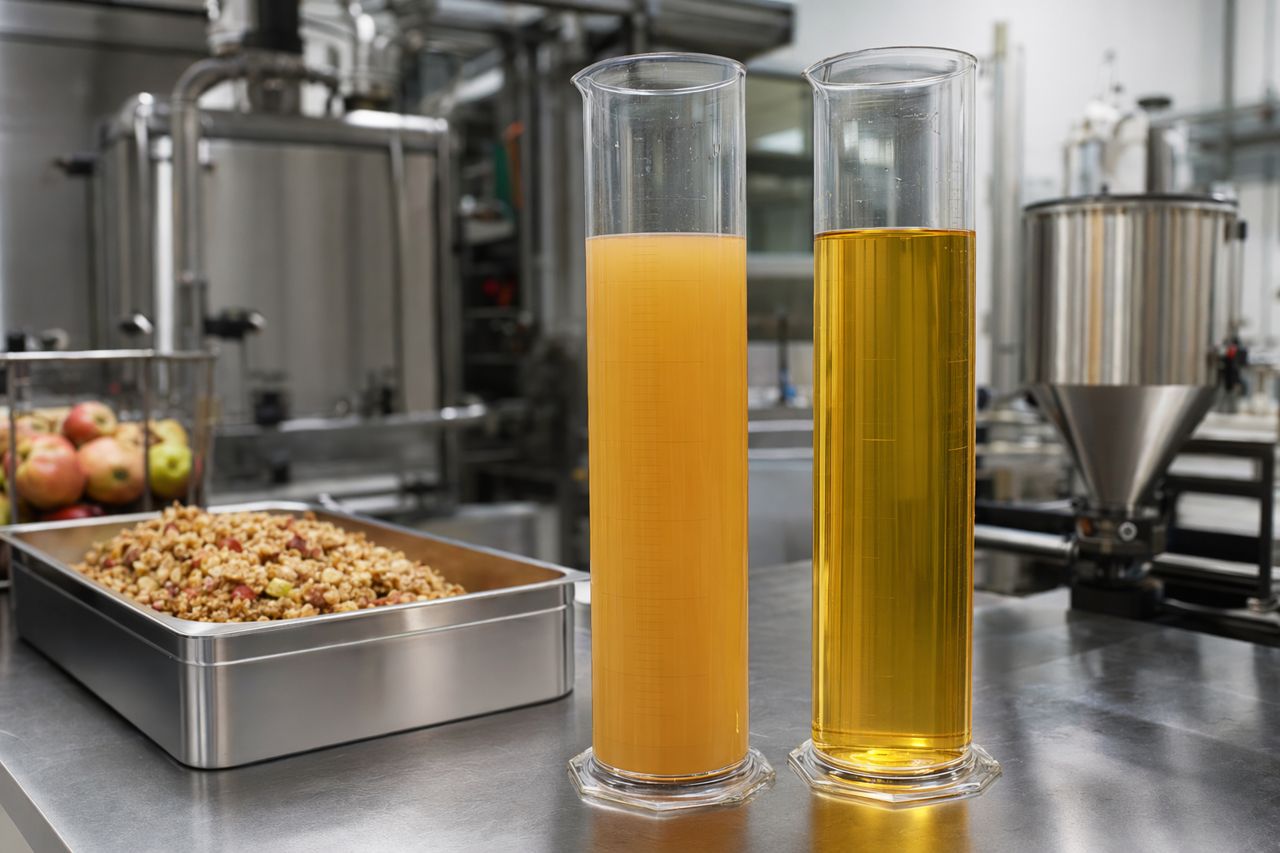
The most common reaction to a low-yield run is to add more pectinase. Fruit-wine and cider technicians who answer this question for small producers say the opposite: past the right amount, extra enzyme does not keep raising juice yield, and it can create other problems. The dose that works is the one matched to the fruit and the process, not the largest one the budget allows.
That is why enzyme makers who sell to fruit-wine factories now offer fruit-wine-specific pectinase programs rather than one general product. Those programs are pitched at four production problems at once: low juice yield, turbidity, browning, and bitterness. For a cider buyer, the lesson is to buy against the problem you actually have.
| What you see | What it usually means | What to ask your supplier |
|---|---|---|
| Yield stays low after a higher dose | The dose is past the useful range, or the problem is not pectin | Which dose range fits this fruit, and what else limits yield |
| Juice is cloudy after pressing | A yield-only product is doing the press job but not the clarity job | Whether the program covers clarification as well as extraction |
| Juice darkens or tastes bitter | Process and enzyme choice are not matched to the fruit | Whether a fruit-wine program addresses browning and bitterness |
Before you raise the dose
- Check the fruit first: stored, soft, cold or high-pectin lots behave differently from fresh fruit.
- Confirm the enzyme had enough contact time before pressing.
- Ask whether the product is a yield product, a clarity product, or a program that targets both.
- Run a side-by-side trial on one lot before changing the dose for the whole season.
- Send us the results with your inquiry: we will recommend a product and dose direction for the fruit you press.
Where the enzyme fits in the cider mill
Enzymesbridge press-yield enzymes are typically used in the mash stream, maceration tank, holding bin, or press feed stage depending on your mill layout. The goal is even contact, enough dwell time for the mash to relax, and a process that fits your existing labor rhythm.
Common application points
- Post-mill mash treatment before transfer to holding
- Maceration tank dosing when dwell time is available
- Press feed conditioning for continuous or semi-continuous operations
- Problem-lot support when stored, soft, or high-pectin apples slow the press
We help match the recommendation to your fruit profile, equipment style, desired dwell time, temperature range, and downstream clarification plan.
Better pressing starts before maximum pressure
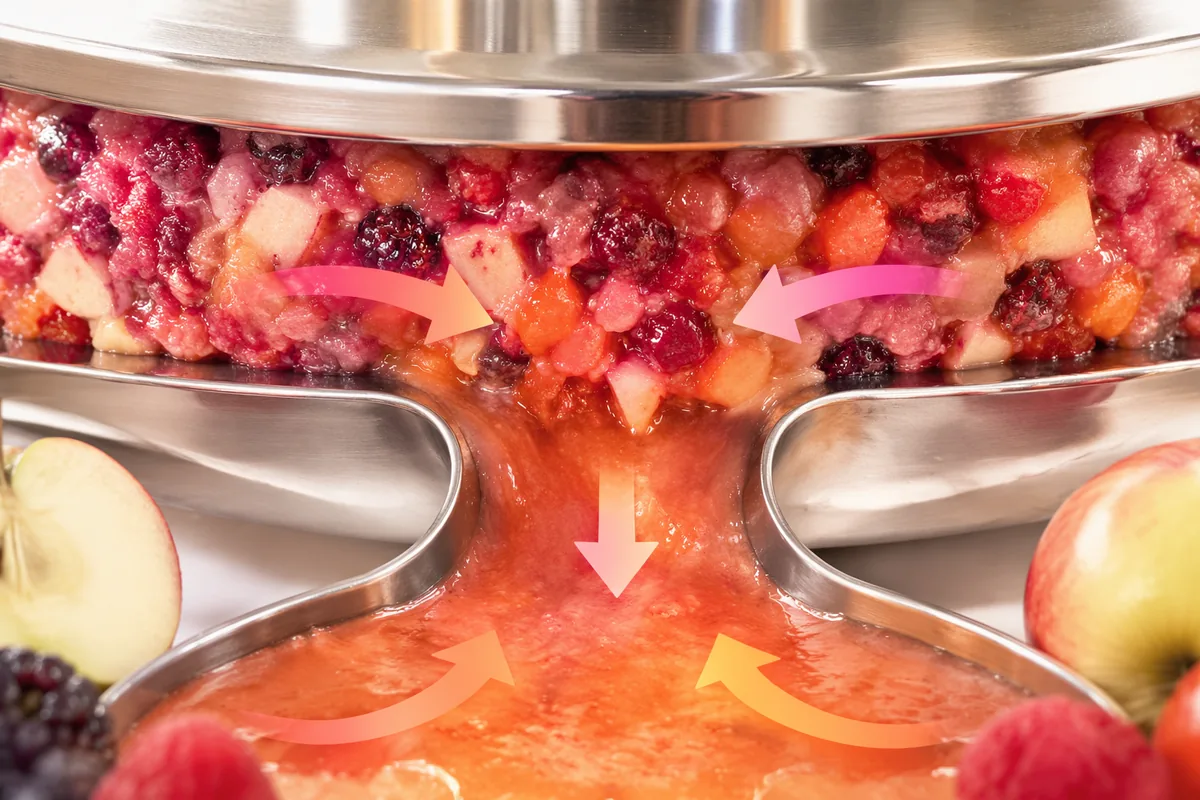
Press yield is not only a matter of press force. If the mash structure is tight, smeary, or pectin-rich, more pressure can compress channels shut and trap juice in the cake. Enzyme conditioning can improve juice mobility earlier in the cycle, supporting more efficient drainage before the press reaches its hardest work.
That can mean:
- More juice released during loading and early compression
- A more permeable pomace bed
- Less time spent chasing the last fraction of recoverable juice
- More stable press performance across shifts
For cider mills, those gains matter because pressing is often the bottleneck between incoming fruit and fermentation capacity.
Built for cider, not generic fruit processing
Cider production has its own balance. You need press yield, but you also care about aroma expression, fermentability, phenolic structure, clarification behavior, and finished cider style.
Enzymesbridge evaluates enzyme recommendations through a cider-maker lens:
- Will the mash drain more cleanly?
- Will the juice settle or clarify more predictably?
- Will the process protect fresh apple aromatics?
- Will the treatment support consistent fermentation planning?
- Will it fit the reality of harvest pressure and variable fruit?
Our role is to supply a practical enzyme solution that helps your mill extract efficiently while keeping the character of the apples in focus.
For craft, regional, and industrial cider mills
Whether your operation runs seasonal crush, year-round juice supply, estate fruit, purchased apples, or blended dessert and cider varieties, press-floor efficiency compounds quickly. A small improvement in recoverable juice per bin can change tank fill, packaging volume, and fruit cost per liter.
Enzymesbridge supports cider producers that need:
- Yield improvement without major equipment changes
- Faster press turns during harvest peaks
- Process support for changing apple lots
- Enzyme supply planning for seasonal demand
- Clear technical guidance for production teams
What we ask before recommending a press-yield enzyme
To make the quote useful, we typically ask for a few production details:
- Apple varieties or general fruit mix
- Fresh, stored, soft, or cold fruit condition
- Mill type and typical particle profile
- Press style and batch or continuous workflow
- Available mash contact time before pressing
- Current issues: wet pomace, slow drainage, cloth blinding, haze, or inconsistent yield
- Desired downstream process: settling, flotation, filtration, or direct fermentation
With those details, Enzymesbridge can recommend an enzyme approach aligned with your actual cider mill process.
Request a quote for cider press-yield enzyme
If press cycles are stretching, pomace is leaving too wet, or apple lots are behaving unpredictably, talk with Enzymesbridge. We will help you evaluate an enzyme solution for cider press yield, mash drainage, and practical production throughput.
Enzymesbridge supplies cider mills, contract pressers, juice processors, distributors and resellers on a quote basis; quantity, pack format and delivery are quoted per order.
Use the on-site request a quote form and include the product or job, your expected quantity, the delivery country, and your apple profile, press type and current yield or drainage challenge.